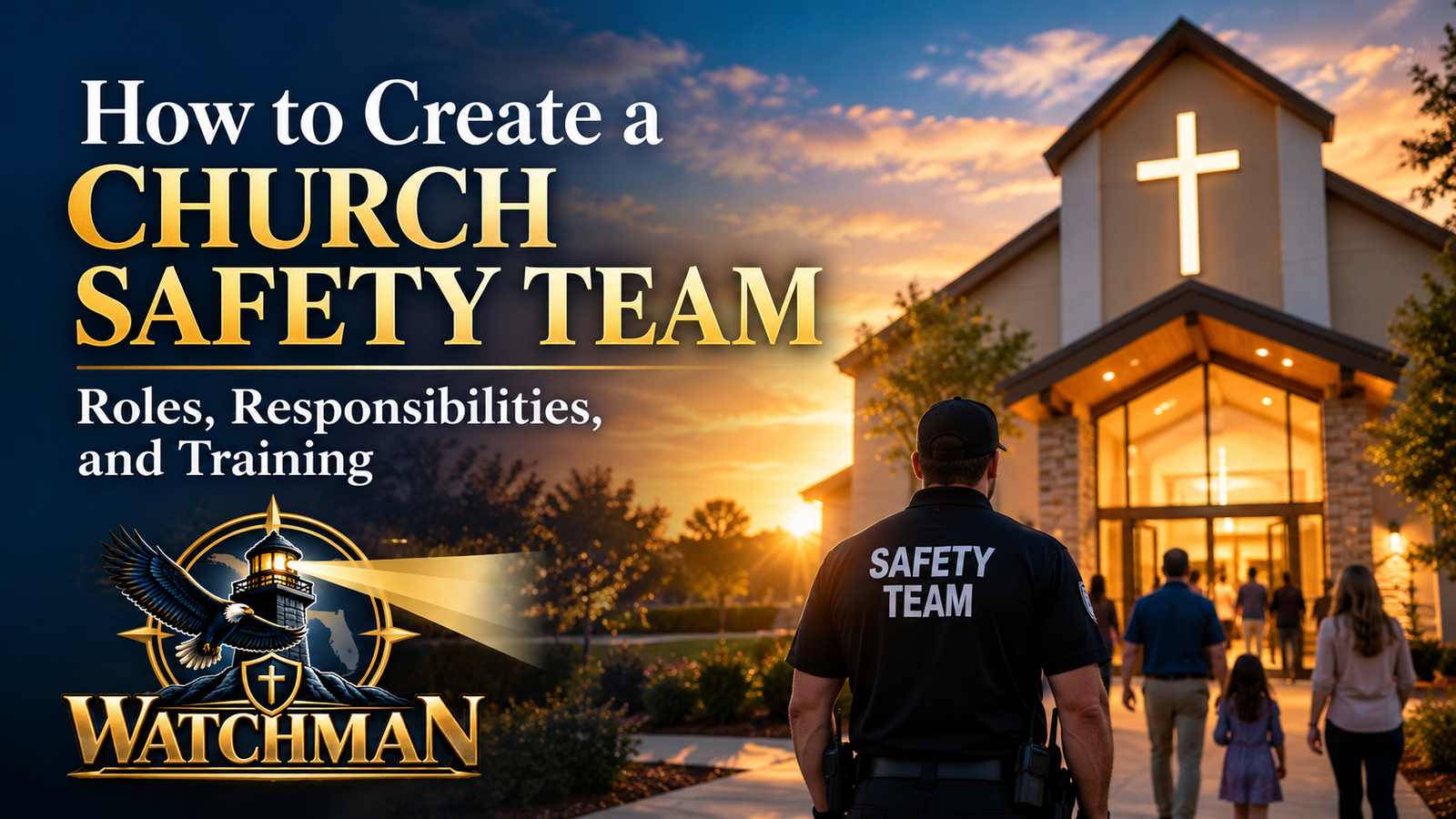
Churches are places of worship, fellowship, and community where individuals and families gather to strengthen their faith and connect with others. While creating a welcoming atmosphere is an important part of every church’s mission, maintaining a safe environment for congregants, staff, volunteers, and visitors is equally essential.
From medical emergencies and severe weather to fire evacuations and unexpected security concerns, churches must be prepared to respond to a variety of situations. One of the most effective ways to improve emergency preparedness is by establishing a dedicated church safety team.
A well-organized church safety team helps identify potential risks, establish emergency procedures, coordinate responses, and ensure that church activities can take place in a secure and welcoming environment.
At Watchman Security Risk Group, we understand that every congregation has unique security needs. Developing a church safety team involves more than simply assigning volunteers to watch entrances. It requires thoughtful planning, clearly defined responsibilities, appropriate training, and ongoing evaluation.
What Is a Church Safety Team?
A church safety team is a designated group of trained staff members or volunteers responsible for supporting the safety and emergency preparedness of a congregation.
Depending on the size and needs of the church, the team may assist with medical emergencies, fire evacuations, severe weather responses, facility safety, access management, and communication with emergency responders.
Some churches refer to these groups as church security teams, safety ministries, or emergency response teams.
Regardless of the name, their primary purpose should remain the same: protecting people while preserving the church’s welcoming environment.
A church safety team should operate under clearly established policies and procedures approved by church leadership. Team members must understand their responsibilities, limitations, and when situations require assistance from trained emergency professionals.
Why Every Church Should Consider a Safety Team
Churches face unique safety challenges because their facilities are designed to be accessible to the public.
During a typical worship service, visitors may enter through multiple doors while children attend separate programs and volunteers manage various activities.
Larger congregations may operate several buildings, host community events, or maintain childcare facilities throughout the week.
Without a coordinated safety team, emergency responsibilities may fall on individuals who have not received appropriate training.
Establishing a dedicated team creates an organized structure for emergency preparedness.
It also provides church leadership with designated personnel who can help identify safety concerns, communicate important information, and assist during unexpected incidents.
Even smaller churches can benefit from assigning basic safety responsibilities to a few trained individuals.
Step 1: Conduct a Church Security Risk Assessment
Before selecting team members or assigning responsibilities, church leadership should evaluate the property’s existing safety and security conditions.
A professional church security risk assessment can help identify potential vulnerabilities and determine which emergency preparedness measures deserve priority.
The assessment may examine building entrances, emergency exits, exterior lighting, parking areas, communication systems, evacuation routes, and areas where children gather.
It should also consider the church’s regular activities, attendance levels, facility layout, and available resources.
For example, a church operating a weekday preschool may require different emergency procedures than a congregation that primarily hosts weekend services.
Understanding these differences allows leadership to create a safety team that addresses actual operational needs rather than relying on generic recommendations.
Step 2: Select the Right Church Safety Team Members
Choosing the right individuals is one of the most important steps in developing an effective church safety ministry.
While previous experience in law enforcement, emergency medical services, firefighting, or security can be valuable, professional experience is not necessarily required for every role.
Churches should prioritize individuals who demonstrate reliability, sound judgment, strong communication skills, emotional maturity, and a willingness to follow established procedures.
Safety team members should also understand the importance of treating congregants and visitors with respect.
The goal is not to create an intimidating environment but to provide a reassuring presence that supports the congregation.
Church leadership should establish appropriate screening and selection procedures, including background checks where warranted, particularly for individuals working around children or vulnerable populations.
Step 3: Establish Clear Church Safety Team Roles
A successful church safety team needs clearly defined responsibilities.
Without an established structure, multiple volunteers may attempt to handle the same situation while other important tasks are overlooked.
Although specific positions will vary by congregation, several roles are commonly beneficial.
Church Safety Team Leader
The safety team leader coordinates the team’s overall activities and serves as the primary connection between volunteers and church leadership.
Responsibilities may include organizing training, reviewing procedures, scheduling team members, maintaining documentation, and coordinating with local emergency services.
The team leader should also help ensure that safety procedures remain consistent with the church’s policies and mission.
Medical Response Coordinator
Medical emergencies can occur during worship services, community gatherings, and other church activities.
A designated medical response coordinator helps ensure appropriate personnel know how to respond when someone becomes injured or ill.
This role may involve maintaining first aid supplies, checking automated external defibrillator (AED) readiness, coordinating CPR and first aid training, and ensuring emergency medical services can access the property.
Team members should provide assistance only within their training and qualifications.
Emergency Evacuation Coordinator
During a fire, severe weather event, or other emergency, an evacuation coordinator helps implement established emergency procedures.
Responsibilities may include directing individuals toward appropriate exits, coordinating with ushers, identifying designated assembly areas, and assisting those who require additional support.
Evacuation procedures should account for children, older adults, and individuals with mobility limitations.
Communications Coordinator
Effective communication is essential during an emergency.
The communications coordinator helps maintain reliable communication between church leadership, safety personnel, ministry volunteers, and emergency responders.
This role may include maintaining emergency contact lists, checking communication equipment, and supporting the delivery of clear instructions during an incident.
Facility Safety Coordinator
A facility safety coordinator helps identify potential hazards throughout the church property.
Responsibilities may include observing emergency exit accessibility, reporting damaged lighting, checking designated safety equipment, and documenting maintenance concerns.
This individual should work closely with church leadership and property maintenance personnel to ensure identified issues receive appropriate attention.
Step 4: Develop Standard Operating Procedures
Once team responsibilities are established, churches should create written Standard Operating Procedures (SOPs) that explain how team members are expected to perform their duties.
SOPs help establish consistency, accountability, and clear expectations.
For example, procedures should address how volunteers report suspicious activity, communicate safety concerns, assist during medical emergencies, and coordinate with responding authorities.
Written procedures should also explain when team members must disengage from a situation and request professional assistance.
These documents should be tailored to the congregation’s facilities, staffing arrangements, and operational needs.
At Watchman Security Risk Group, developing practical, understandable procedures is an important part of helping organizations improve their preparedness.
Step 5: Create a Church Emergency Action Plan
While standard operating procedures define routine responsibilities, an Emergency Action Plan (EAP) establishes how the church should respond to specific emergency situations.
A comprehensive church emergency action plan should address fires, severe weather, medical emergencies, evacuations, shelter-in-place situations, and relevant security threats.
The plan should identify communication methods, decision-making responsibilities, emergency contacts, and designated evacuation or shelter locations.
Churches should also establish procedures for accounting for children and coordinating reunification with authorized parents or guardians.
An effective emergency action plan must be accessible to appropriate personnel and reviewed whenever significant operational changes occur.
Step 6: Provide Appropriate Church Safety Team Training
Training is essential for turning a group of volunteers into a coordinated safety team.
Team members should receive instruction based on their assigned responsibilities and the church’s identified risks.
Foundational training may include emergency communication, situational awareness, recognizing concerning behavior, de-escalation, evacuation assistance, and incident reporting.
CPR, AED, and first aid certification can also be valuable for designated personnel.
Churches should emphasize calm decision-making, respectful interactions, and knowing when to contact emergency services.
Any specialized security responsibilities should be supported by appropriate professional training and must comply with applicable laws and church policies.
Safety volunteers should never be expected to perform duties beyond their qualifications.
Step 7: Practice Emergency Response Procedures
Written plans and classroom instruction are important, but practical exercises help determine whether procedures can be implemented effectively.
Churches can conduct tabletop exercises where safety team members discuss hypothetical emergencies and explain how they would respond.
For example, leadership might review how the team would handle a medical emergency during a crowded Sunday service or a tornado warning during children’s ministry activities.
These discussions can identify communication gaps, unclear responsibilities, and areas requiring additional training.
Appropriately planned evacuation and emergency drills can also improve familiarity with procedures.
After each exercise, team leaders should document lessons learned and make necessary improvements.
Step 8: Coordinate With Local Emergency Responders
Church safety teams should establish appropriate relationships with local law enforcement, fire departments, and emergency medical services.
These relationships can help churches better understand emergency response expectations and identify opportunities for coordination.
Local responders may be able to provide guidance regarding building access, emergency vehicle routes, fire safety considerations, and preparedness resources.
Churches should also ensure emergency contact information and relevant property details remain current.
A church safety team is not a replacement for professional emergency responders. Its purpose is to support preparedness, provide appropriate initial assistance, and facilitate an organized response until qualified personnel arrive.
Step 9: Review and Improve Church Safety Team Procedures
Creating a church safety team is not a one-time project.
As congregations grow, volunteers change, and facilities evolve, safety procedures must be reviewed and updated.
Churches should consider conducting quarterly reviews of selected procedures and a comprehensive annual evaluation of their emergency preparedness program.
Additional reviews may be necessary following major events, facility renovations, or significant incidents.
Ongoing security consulting can help church leadership identify changing risks, improve documentation, and maintain consistent training standards.
Regular evaluation helps ensure the team remains prepared rather than simply maintaining a list of assigned volunteers.
How Watchman Security Risk Group Can Help Your Church
Building an effective church safety team requires careful planning, practical procedures, and a clear understanding of the congregation’s unique needs.
Watchman Security Risk Group helps churches and other organizations strengthen emergency preparedness through professional security risk assessments, emergency action planning, standard operating procedure development, and security consulting.
Whether your church is establishing its first safety ministry or improving an existing program, professional guidance can help identify vulnerabilities, clarify responsibilities, and create a more organized approach to emergency preparedness.
Our goal is to help churches develop practical safety measures that support their mission without compromising the welcoming atmosphere congregants and visitors expect.
Build a Safer, More Prepared Church Community
Every church wants its members, visitors, staff, and volunteers to feel safe.
Establishing a dedicated church safety team is an important step toward achieving that goal.
By identifying risks, selecting responsible volunteers, establishing clear procedures, providing appropriate training, and regularly reviewing emergency plans, churches can improve their ability to respond to unexpected situations.
A strong church safety team is built on preparation, communication, and a commitment to protecting others.
If your congregation is ready to strengthen its safety and emergency preparedness efforts, Watchman Security Risk Group can help.
Visit us online at watchmansecurityriskgroup.com to learn more about church security assessments, emergency action plans, standard operating procedures, and professional security consulting.